Buy horn manure 500
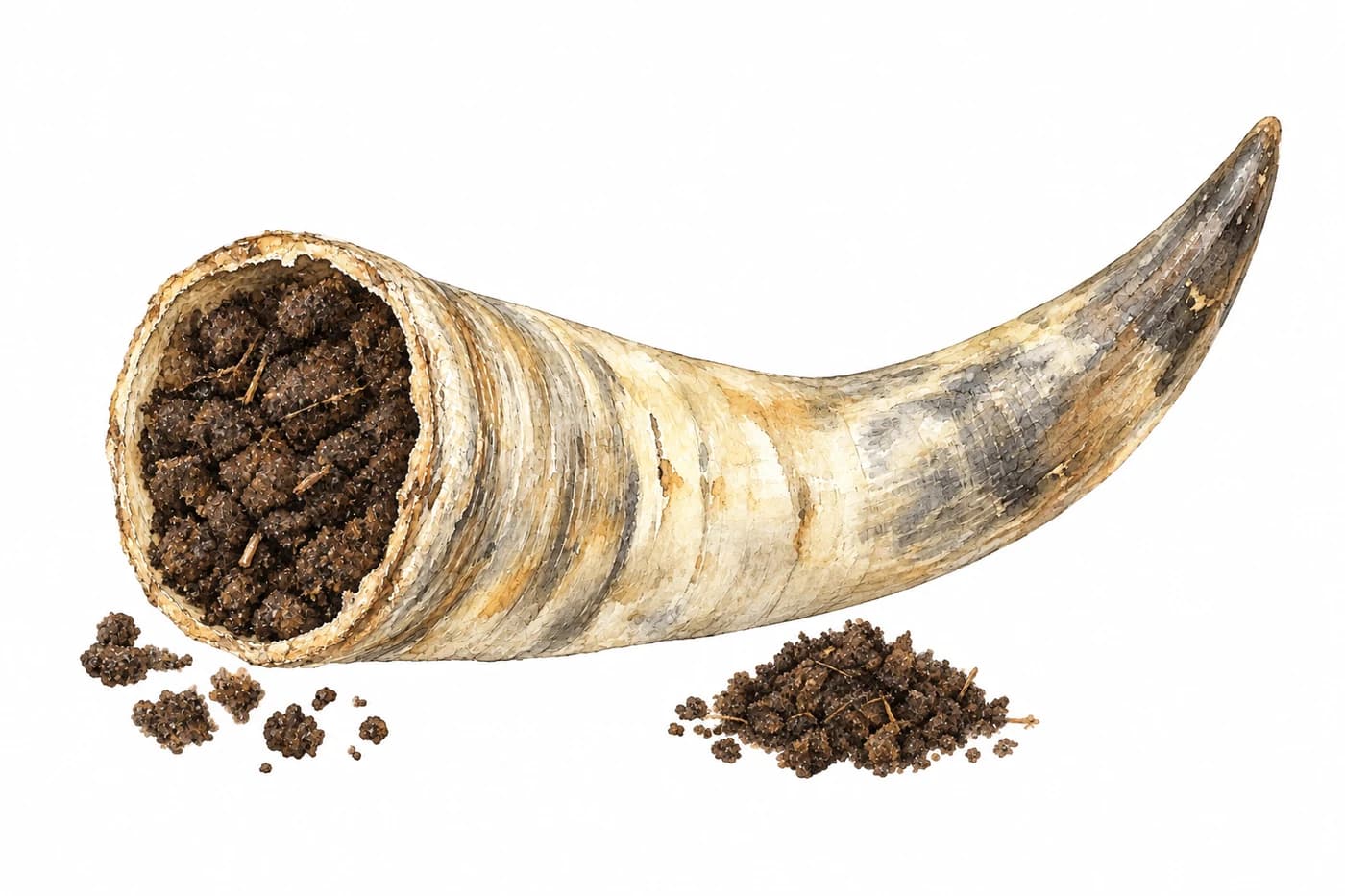
The most important soil preparation in biodynamics: cow manure, transformed in a cow horn over winter, stirred and sprayed onto the soil in the evening.
Goes well with


What it is for
Promotes a living soil, humus formation and root growth. Works in depth and strengthens soil life.
Dose and application
Amount: 100 g/ha in 25–35 L water (home garden: 10–20 g in 5–10 L per 1,000 m²). Stir rhythmically for 1 hour (alternately forming vortices, lukewarm water approx. 37 °C). Apply as soon as possible after stirring, close to the ground in large drops (brush broom, knapsack sprayer with a coarse nozzle). Late afternoon from 4–5 pm under a lightly overcast sky is ideal, late evening in hot weather. Do not spray if there is a risk of night frost. Note: no more than 3–4× per crop per year – overuse harms the storage quality of the harvest (Masson). If blocked by horn silica: as an exception, spray 500 onto the leaves.
- Time of day
- evening
- Months
- Feb–May, Jul–Dec (depending on context)
Horn manure and horn silica: below and above
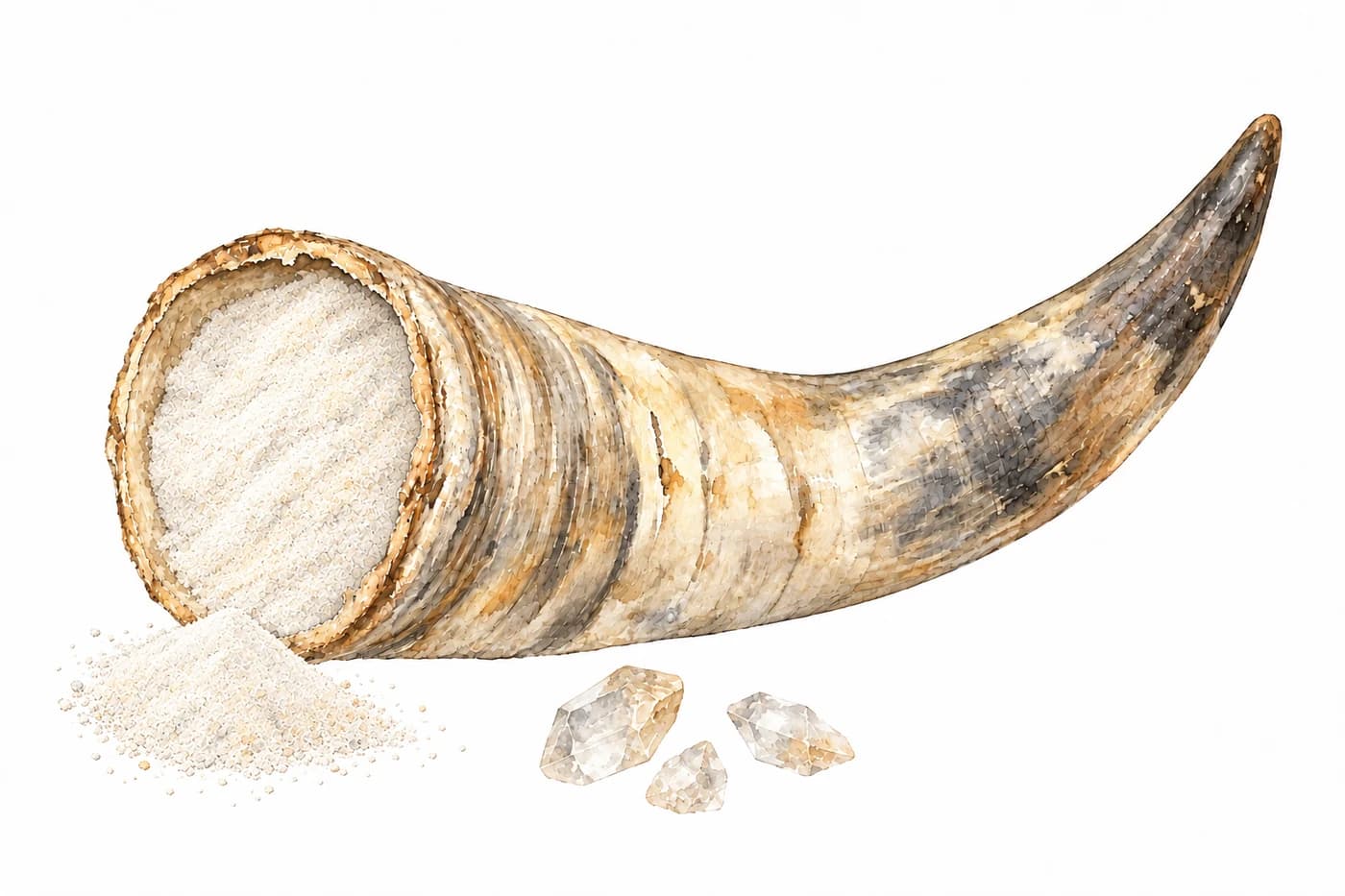
The two spray preparations work as a pair. Horn manure works in the soil, horn silica in the light and in the plant.
Above ground
- 1
Horn silica shapes the plant’s metabolism and growth in harmony.
In the soil
- 2
Horn manure enlivens and activates the soil and opens it to cosmic impulses.
- 3
Compost preparations order the structure of the soil.
- 4
Lime draws the earthly down into the soil.
- 5
Clay helps the cosmic rise upwards.
- 6
Silica reflects the cosmic back.
Source
Compiled from knowledge graphic no. 3 in Lebendige Erde (3/2019).
What studies have found
Results from field trials and laboratory studies on this preparation.
Like an inoculation
Horn manure brings a community of bacteria into the soil.
Depends on the site
How strongly horn manure works depends on the growing conditions.
In balance
Together, horn manure and horn silica keep growth and ripening in balance.
Three times is stronger
Three sprayings show clearer effects, above all in inner quality.
Sources
- Fritz, J. et al. (2024): Präparate, Bodenmikrobiom, Pflanze. Beeinflussen biodynamische Spritzpräparate das potenziell pflanzenwachstumsfördernde Mikrobiom im Boden? Lebendige Erde 6/2024, S. 38 ff.
- Morau, A., Piepho, H.-P. (2020): Interactions between abiotic factors and the bioactivity of biodynamic horn manure on the growth of garden cress. Chemical and Biological Technologies in Agriculture 7, 11.
- Valdez, R. E., Fernandez, P. G. (2008): Productivity and seed quality of rice (Oryza sativa L.) cultivars grown under synthetic, organic fertilizer and biodynamic farming practices. Philippine Journal of Crop Science 33(1), S. 37–58.
- Spieß, H. (1978): Konventionelle und biologisch-dynamische Verfahren zur Steigerung der Bodenfruchtbarkeit. Dissertation, Gießen.
- Oltmanns, M. (2023): Zur Anwendungsfrequenz biodynamischer Präparate: Wirkt die mehrfache Anwendung der Feldspritzpräparate auf die Produktqualität? Lebendige Erde 3/2023, S. 40 ff.
Compiled from knowledge graphic no. 48 in Lebendige Erde (5/2026) · Research on the spray preparations at the University of Kassel
Preparations today
What the moon’s course offers for horn manure, horn silica and horsetail. Season, soil and weather come first.
Horn manure (500) · descending moon, evening
✓ Suits today · until 09:31
Garden – up to 5000 m² · €19.69Add to cart
Horn manure (500) in the shop →Horn silica (501) · ascending moon, morning
✓ Suits today · from 09:31
Garden – up to 5000 m² · €14.19Add to cart
Horn silica (501) in the shop →Horsetail (508) · two days before full moon
Next day: Sunday, November 22, 2026
Garden – up to 5000 m² · €14.19Add to cart
Horsetail (508) in the shop →