Flower crop · Light (Gemini, Libra, Aquarius)
Artichokes by the moon calendar 2027
For Artichokes the biodynamic calendar uses the flower day: the moon then stands in front of Gemini, Libra, Aquarius. Sowing and planting: February, March, April. Harvest: July, August, September.
The sowing days in your inbox once a month
The calendar mail brings the sowing days and all gardening sheets as PDFs every month. Free, unsubscribe with one click.
The next favourable days
Flower days in season
Monday, February 8, 2027Flower dayAquarius
Moon path: ascending
Wednesday, February 17, 2027Flower dayGemini
Moon path: descending
Thursday, February 18, 2027Flower dayGemini
Moon path: descending
Friday, February 26, 2027Flower dayLibra
Moon path: descending
Saturday, February 27, 2027Flower dayLibra
Moon path: descending
Sunday, March 7, 2027Flower dayAquarius
Moon path: ascending
Monday, March 8, 2027Flower dayAquarius
Moon path: ascendingNew Moon
Tuesday, March 16, 2027Flower dayGemini
Moon path: descending
The days follow Maria Thun’s method.Maria Thun calendar today →Get the PDF →
Sowing, planting and harvesting by the moon
- Sowing and planting
- February, March, April
- Harvest
- July, August, September
The months apply to Central Europe. In the southern hemisphere they fall half a year later; in the calendar app you can switch this under Hemisphere.
Sow on a flower day. Plant out and transplant in the descending moon, leaving a few hours around lunar nodes and perigee free.
Harvest parts above ground in the morning, preferably in the ascending moon.
Artichokes
In practice
To harvest plump buds in high summer, start artichokes off indoors from the end of January. The seeds look like sunflower seeds. They go in singly, 1 to 2 cm deep, in small pots or module trays filled with seed compost, with the hole pressed in first using a dibber or a pencil. Where possible, sow on flower days during the descending Moon. At 20 to 25 °C germination takes 15 to 20 days.
The young plants then move into larger pots with humus-rich soil and carry on growing in a bright spot at no more than 18 to 20 °C. Before planting out, they are hardened off in a sheltered place. They are planted out together with the other warmth-loving crops such as tomatoes and peppers.
The artichoke needs warmth. Varieties such as “Green Globe” or “Imperial Star” give a reliable harvest even in moderately warm areas.
Companion planting
Good and bad neighbours
- Good neighbours
- French bean, Butterhead lettuce
Sources: Gertrud Franck, Schwester Christa, Mischkultur-Praxis.
Growing
Position and crop rotation
- Group
- Vegetables
- Growing time
- approx. 180 days
- Position
- Sun
- Nutrient needs
- Heavy feeder
Crop rotation: the following year Medium feeder in the bed.
Perennial; the flower buds are eaten. Rich, deep soil.
Frequently asked questions about Artichokes and the moon
When do you sow and plant Artichokes by the moon calendar?
In February, March, April on a flower day. The next suitable days are listed at the top of this page.
When do you harvest Artichokes by the moon?
In July, August, September on a flower day. Harvest parts above ground in the morning, preferably in the ascending moon.
Which neighbours suit Artichokes?
Good neighbours: Butterhead lettuce, French bean. Bad neighbours: none known.
Buy and use biodynamic preparations
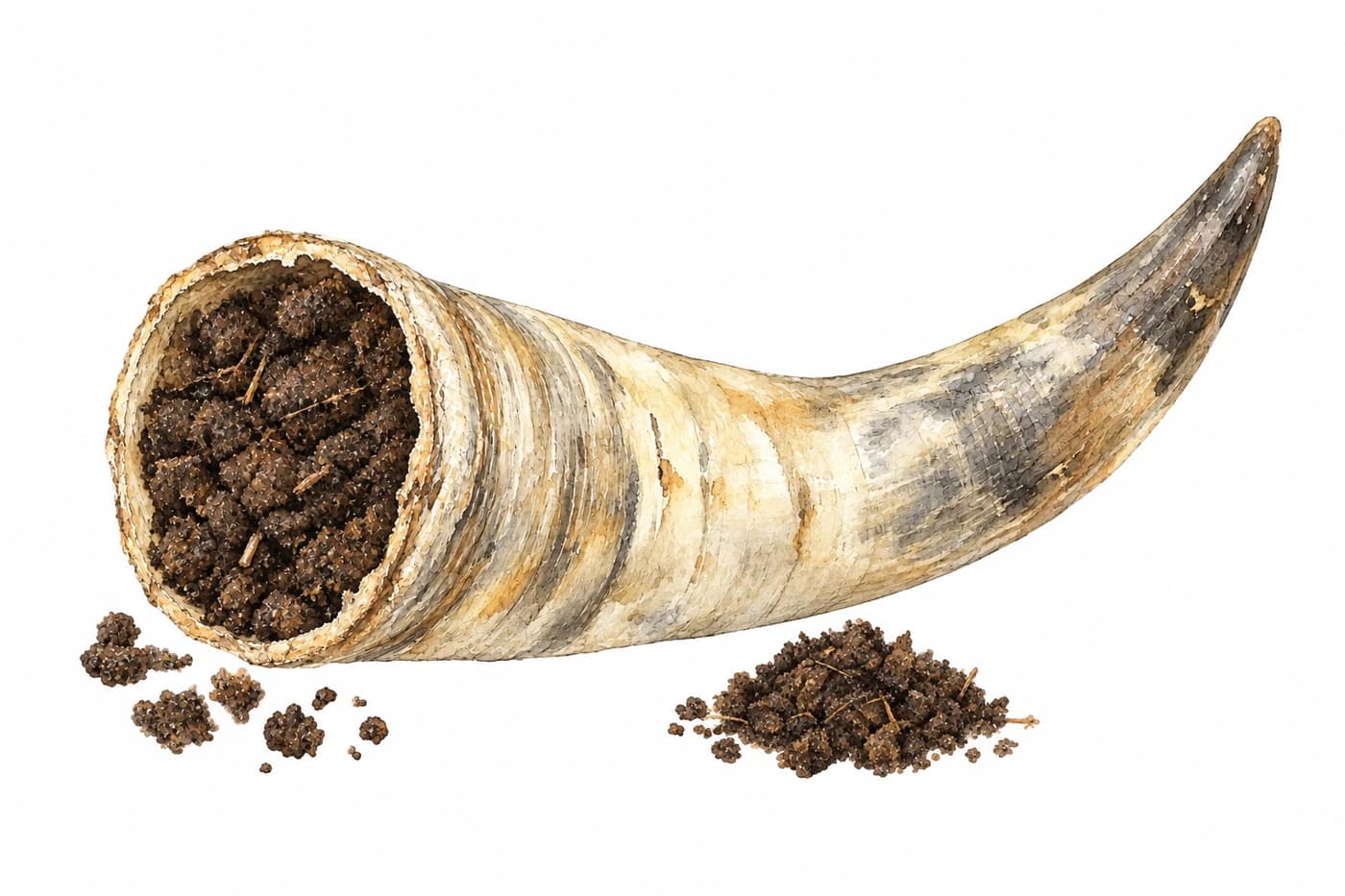 Horn manure 500from €19.69View preparation →
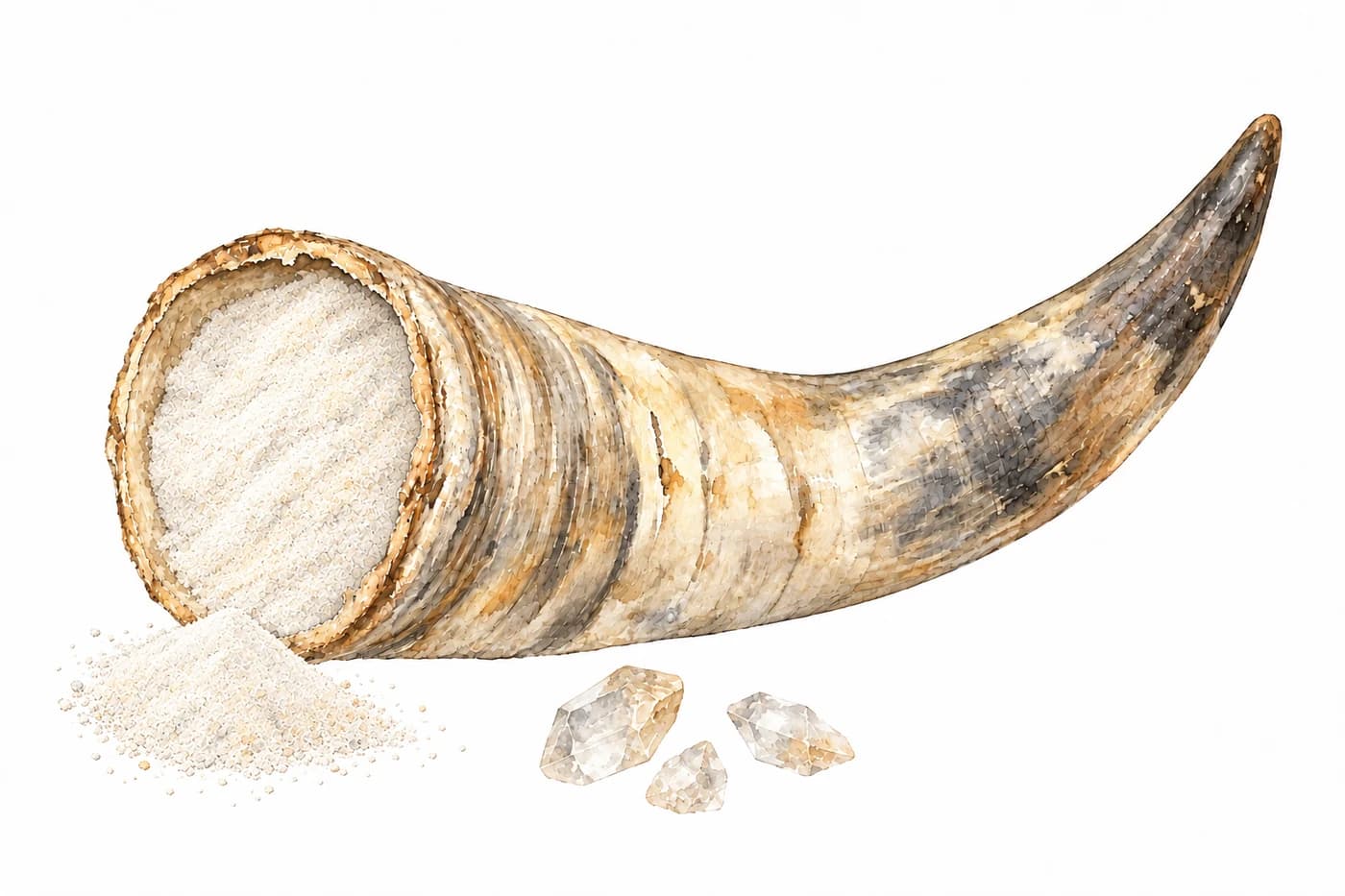 Horn silica 501from €14.19View preparation →
 Horsetail preparation 508from €14.19View preparation →
All biodynamic preparations →How much do I need? Open the preparation calculator →
More plants by the moon
Gardening by the moon
 Planting and transplanting by the moon
 Repotting by the moon
 Pruning by the moon
 Fertilising and soil work by the moon
 Harvesting by the moon
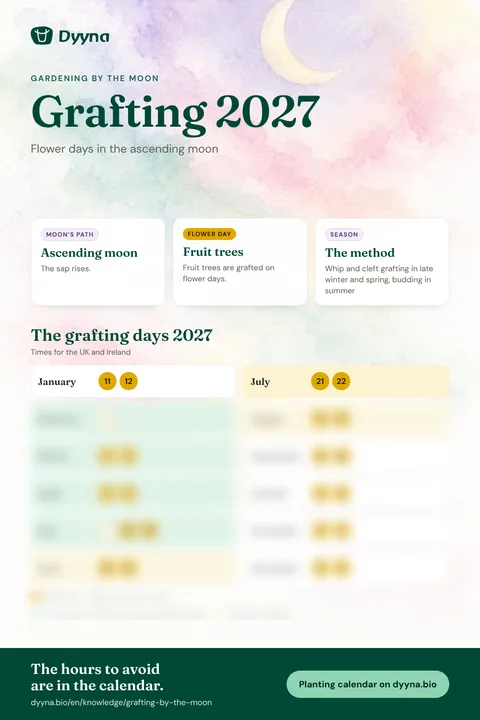 Grafting by the moon
 Watering by the moon calendar 2026
 Mowing and sowing the lawn by the moon calendar 2026
 Cutting the hedge by the moon calendar 2026
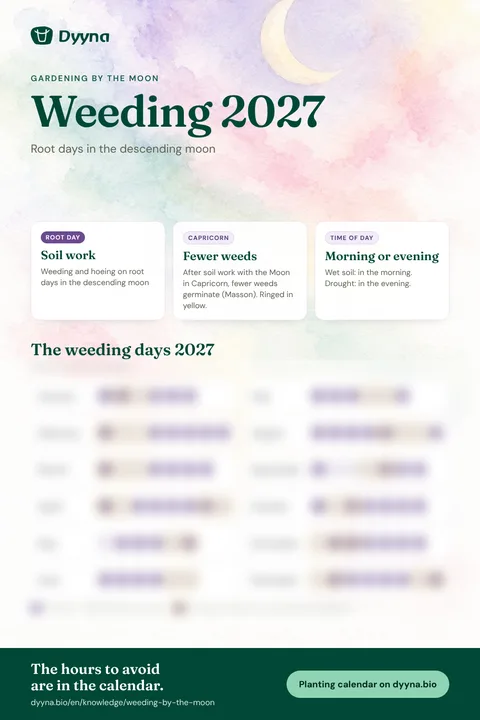 Weeding by the moon calendar 2026
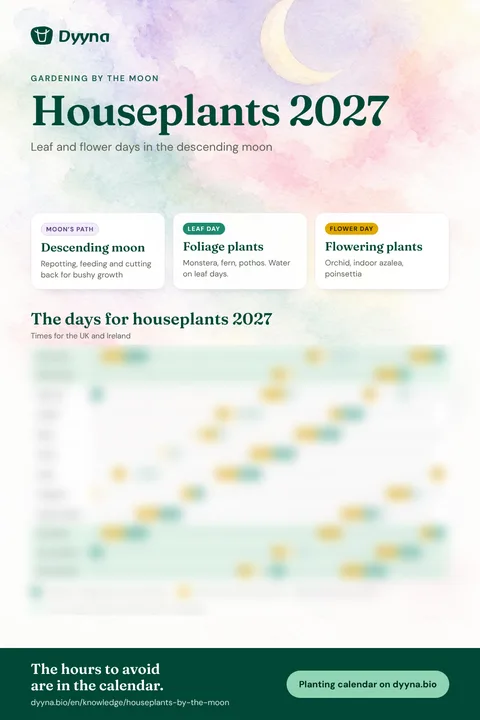 Houseplants by the moon calendar 2026
- Felling trees and cutting timber by the moon 2026
Sources: Demeter-Gartenrundbrief 1/2026 · Demeter-Gartenrundbrief 3/2023 · Demeter-Gartenrundbrief 6/2025