Fruit crop · Warmth (Aries, Leo, Sagittarius)
Peas by the moon calendar 2027
For Peas the biodynamic calendar uses the fruit day: the moon then stands in front of Aries, Leo, Sagittarius. Sowing and planting: March, April, May, June. Harvest: May, June, July, August.
The sowing days in your inbox once a month
The calendar mail brings the sowing days and all gardening sheets as PDFs every month. Free, unsubscribe with one click.
The next favourable days
Fruit days in season
Tuesday, March 2, 2027Fruit daySagittarius
Moon path: ascending
Wednesday, March 3, 2027Fruit daySagittarius
Moon path: ascending
Friday, March 12, 2027Fruit dayAries
Moon path: ascending
Saturday, March 20, 2027Fruit dayLeo
Moon path: descending
Sunday, March 21, 2027Fruit dayLeo
Moon path: descending
Monday, March 29, 2027Fruit daySagittarius
Moon path: ascending
Tuesday, March 30, 2027Fruit daySagittarius
Moon path: ascendingLast Quarter
Wednesday, March 31, 2027Fruit daySagittarius
Moon path: ascending
The days follow Maria Thun’s method.Maria Thun calendar today →Get the PDF →
Sowing, planting and harvesting by the moon
- Sowing and planting
- March, April, May, June
- Harvest
- May, June, July, August
The months apply to Central Europe. In the southern hemisphere they fall half a year later; in the calendar app you can switch this under Hemisphere.
Sow on a fruit day. Plant out and transplant in the descending moon, leaving a few hours around lunar nodes and perigee free.
Harvest parts above ground in the morning, preferably in the ascending moon.
Peas
In practice
Peas are usually sown in single rows against a support, 30 to 45 cm between rows and about 3 cm apart in the row, or in double rows if the spacing is wider. Sowing depth is about 3 cm. A layer of fleece or netting keeps birds off until after germination. Low varieties climb on pea sticks pushed into the ground, and tall ones need netting, a fence or canes with strings stretched between them. Round-seeded peas mostly manage without support and are the most cold-hardy. In mild areas they go in as early as the end of February.
Loose, humus-rich soil and even moisture encourage growth. From flowering and as the pods set, peas need more water, and in May they are earthed up. Wet soil and too tight a rotation encourage soil-borne fungi. A break of four to five years is advisable, and in mixed cropping the peas move at least one row further each year. In heat and drought, powdery mildew can appear, and gentle overhead watering helps. If there are root problems, the fusarium-resistant wrinkled pea “Maxigolt” is a good choice.
Sugar peas are picked every two to three days. This keeps them setting, and the pods stay tender. Mangetout are harvested while the peas are very small, sugar snaps when they are slightly fuller. Wrinkled peas are ripe when the pea is fully formed and still green, and any surplus can be frozen. Round-seeded peas are left until the pods are dry and the peas are yellow or brown. Dried, they keep for a long time in a jar.
Biodynamics recommends valerian for peas. The flower extract is a particular stimulant for legumes and encourages the formation of root nodules. For the seed bath, the chamomile preparation is a good fit.
Companion planting
Good and bad neighbours
- Good neighbours
- Cauliflower, Broccoli, Chinese cabbage, Dill, Fennel (bulb), White mustard, Cucumber, Kohlrabi, Butterhead lettuce, Maize, Carrot, Oilseed radish, Radish, Winter radish, Brussels sprouts, Red cabbage, Sage, White cabbage, Courgette
- Bad neighbours
- French bean, Potato, Garlic, Lucerne, Sweet pepper, Leek, Shallot, Chives, Spring vetch, Climbing bean, Sweet lupin, Tomato, Winter vetch, Onion
Sources: Gertrud Franck, Schwester Christa, Mischkultur-Praxis.
Growing
Position and crop rotation
- Group
- Vegetables
- Growing time
- approx. 65 days
- Position
- Sun
- Nutrient needs
- Green manure
Crop rotation: fixes nitrogen — afterwards Heavy feeder in the bed.
Preceding crop: Lamb's lettuce, Spinach (in the bed before)
Following crop: Kale, Chinese cabbage, Lamb's lettuce, Endive, Carrot, French bean (in the bed afterwards)
Frequently asked questions about Peas and the moon
When do you sow and plant Peas by the moon calendar?
In March, April, May, June on a fruit day. The next suitable days are listed at the top of this page.
When do you harvest Peas by the moon?
In May, June, July, August on a fruit day. Harvest parts above ground in the morning, preferably in the ascending moon.
Which neighbours suit Peas?
Good neighbours: Broccoli, Brussels sprouts, Butterhead lettuce, Carrot, Cauliflower, Chinese cabbage, Courgette, Cucumber, Dill, Fennel (bulb), Kohlrabi, Maize, Oilseed radish, Radish, Red cabbage, Sage, White cabbage, White mustard, Winter radish. Bad neighbours: Chives, Climbing bean, French bean, Garlic, Leek, Lucerne, Onion, Potato, Shallot, Spring vetch, Sweet lupin, Sweet pepper, Tomato, Winter vetch.
Buy and use biodynamic preparations
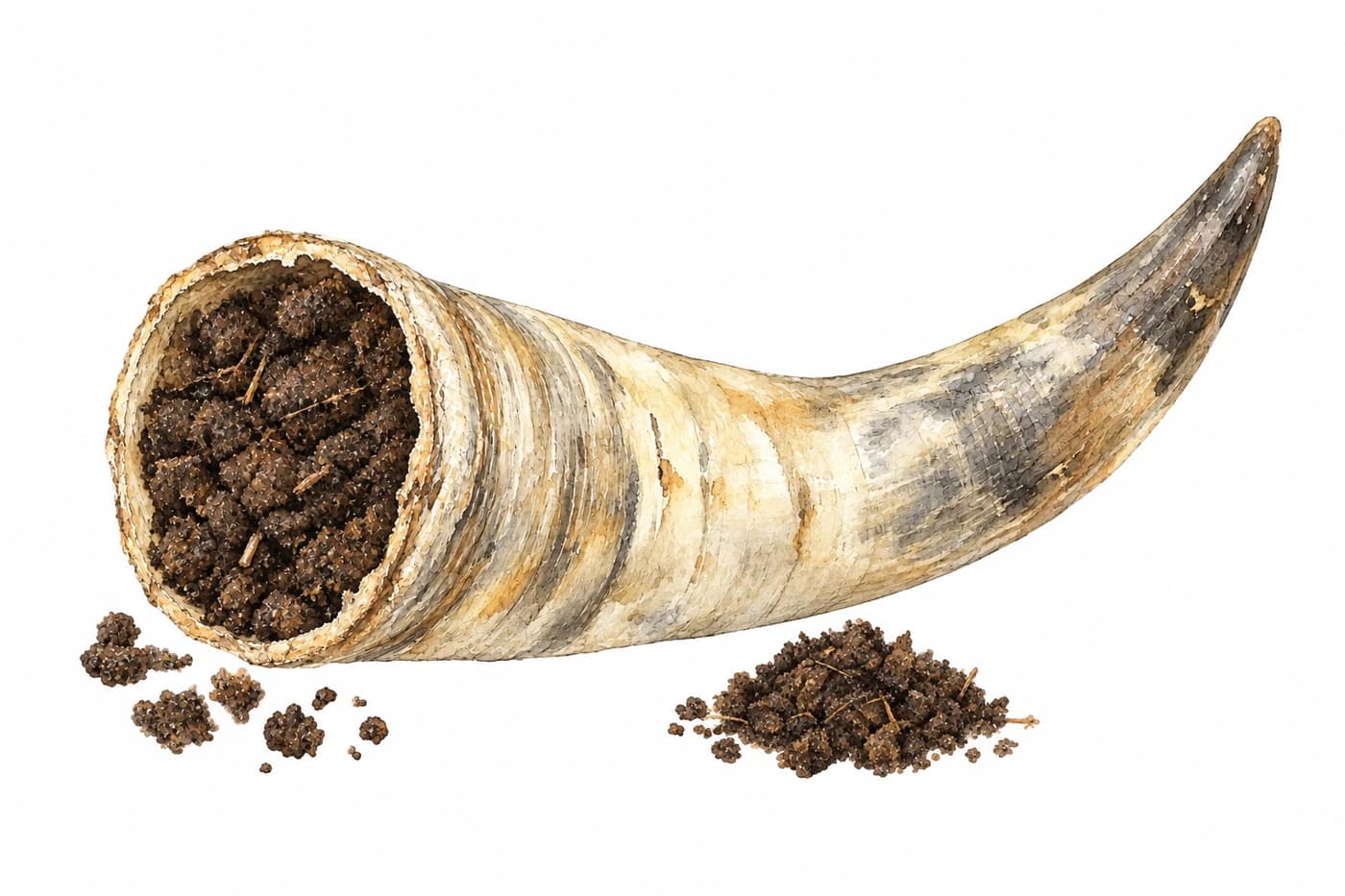 Horn manure 500from €19.69View preparation →
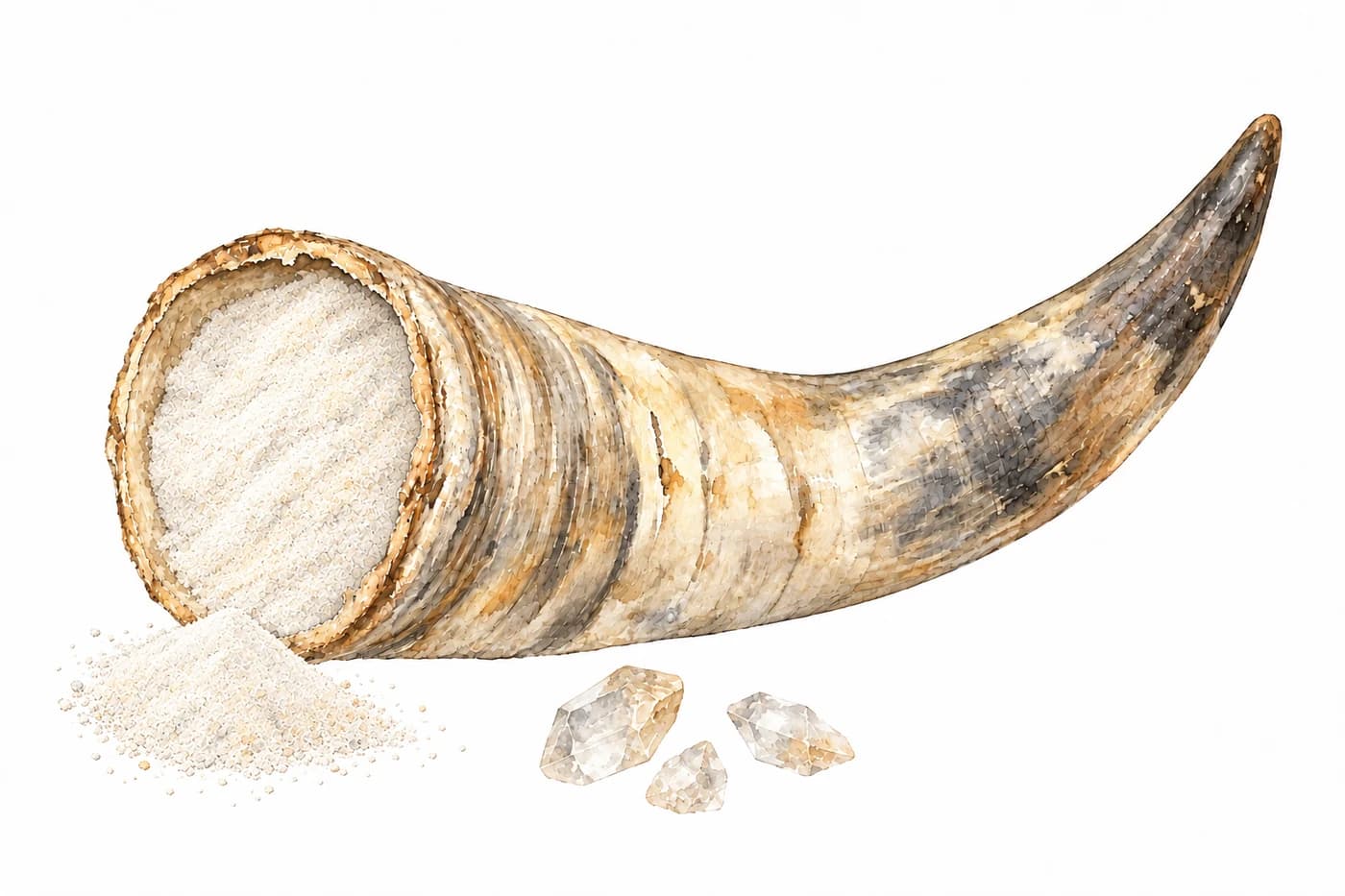 Horn silica 501from €14.19View preparation →
 Horsetail preparation 508from €14.19View preparation →
All biodynamic preparations →How much do I need? Open the preparation calculator →
More plants by the moon
Gardening by the moon
 Planting and transplanting by the moon
 Repotting by the moon
 Pruning by the moon
 Fertilising and soil work by the moon
 Harvesting by the moon
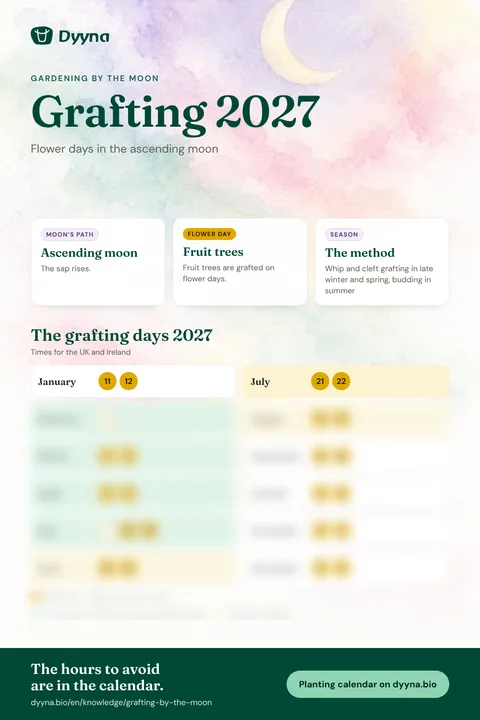 Grafting by the moon
 Watering by the moon calendar 2026
 Mowing and sowing the lawn by the moon calendar 2026
 Cutting the hedge by the moon calendar 2026
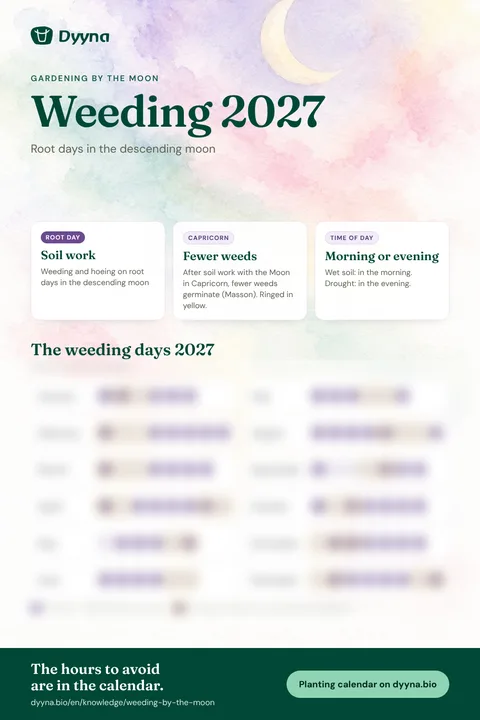 Weeding by the moon calendar 2026
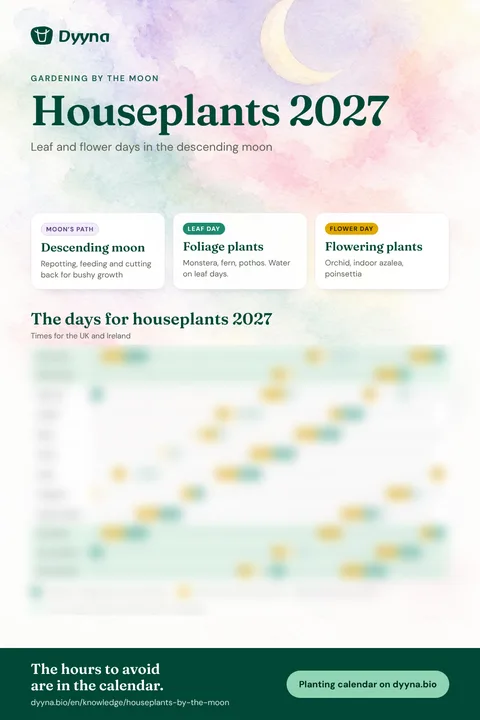 Houseplants by the moon calendar 2026
- Felling trees and cutting timber by the moon 2026
Sources: Demeter-Gartenrundbrief 2/2026 · Demeter-Gartenrundbrief 3/2024 · Demeter-Gartenrundbrief 1/2026 · Pierre Masson: Landwirtschaft, Garten- und Weinbau biodynamisch