Farm organism
The guiding image of biodynamic agriculture: the farm understood as one living organism that produces what it needs from within itself.
The sowing days in your inbox once a month
The calendar mail brings the sowing days and all gardening sheets as PDFs every month. Free, unsubscribe with one click.
What is the farm organism?
The farm organism is the central guiding image of biodynamic agriculture, the idea from which all others follow. The basic idea: a farm is not a collection of fields, animals and machines but is understood as a single living organism, comparable to a living being whose members (soil, plants, animals, people) work together and support one another.
From this follows the aim of a largely closed farm cycle: a healthy farm produces what it needs (feed, manure, seed) as far as possible from within itself instead of buying it in. What comes in and what goes out should be in balance. The Demeter standards turn this image into a programme: biodynamic agriculture wants "to develop farms as individual farm organisms" and to that end organises "an interplay of people, animals, plants and soil, taking account of the characteristics of the site, up to cosmic influences".
Origin: Steiner's image of individuality
The image goes directly back to Rudolf Steiner. In the second lecture of the Agriculture Course (10 June 1924) he formulated the idea that still shapes the method today:
"A farm fulfils its essence in the best sense of the word when it can be conceived as a kind of individuality in itself, a truly self-contained individuality."
Steiner added that every farm must at least approach this state; it can never be reached completely. And he drew a remarkable conclusion: whatever manure and the like is bought in from outside should, "in an ideally designed farm, already be seen as a remedy for a farm that has fallen ill". A healthy farm should be able to produce what it needs itself. In this picture, buying in is therefore not forbidden, but it is a sign that something is missing in the organism.
The role of animals
In the biodynamic understanding, animals, especially ruminants, are an indispensable member of the farm organism, not as a line of production but as an organ. They make use of grassland that people cannot eat, provide food and above all the manure that closes the nutrient cycle. The Demeter standards state that the ability of ruminants "to make use of grassland and, besides high-quality food, to provide valuable manure" "cannot be done without in modern agriculture".
Steiner went further: animal manure still contains "the disposition of the I"; manure from the farm's own stable carries forces the farm needs for self-regulation. A farm without its own animals therefore has to bring in this function in another way: through cooperation with livestock farmers or through bought-in, biodynamically treated farmyard manure. For horticultural holdings above a certain size, the Demeter standards require a minimum livestock density or equivalent compensating measures.
The closed cycle in practice
How does a farm approach the ideal? Through several interlocking measures: a varied crop rotation with legumes that fix nitrogen; its own compost management, which turns crop residues and manure into humus; crops suited to the site; and the biodynamic preparations, which enliven soil and compost. Buying in feed and fertiliser is reduced as far as possible. The result is not self-sufficiency for its own sake, but a farm that renews its fertility from within rather than obtaining it from outside.
Farm organism and the preparations
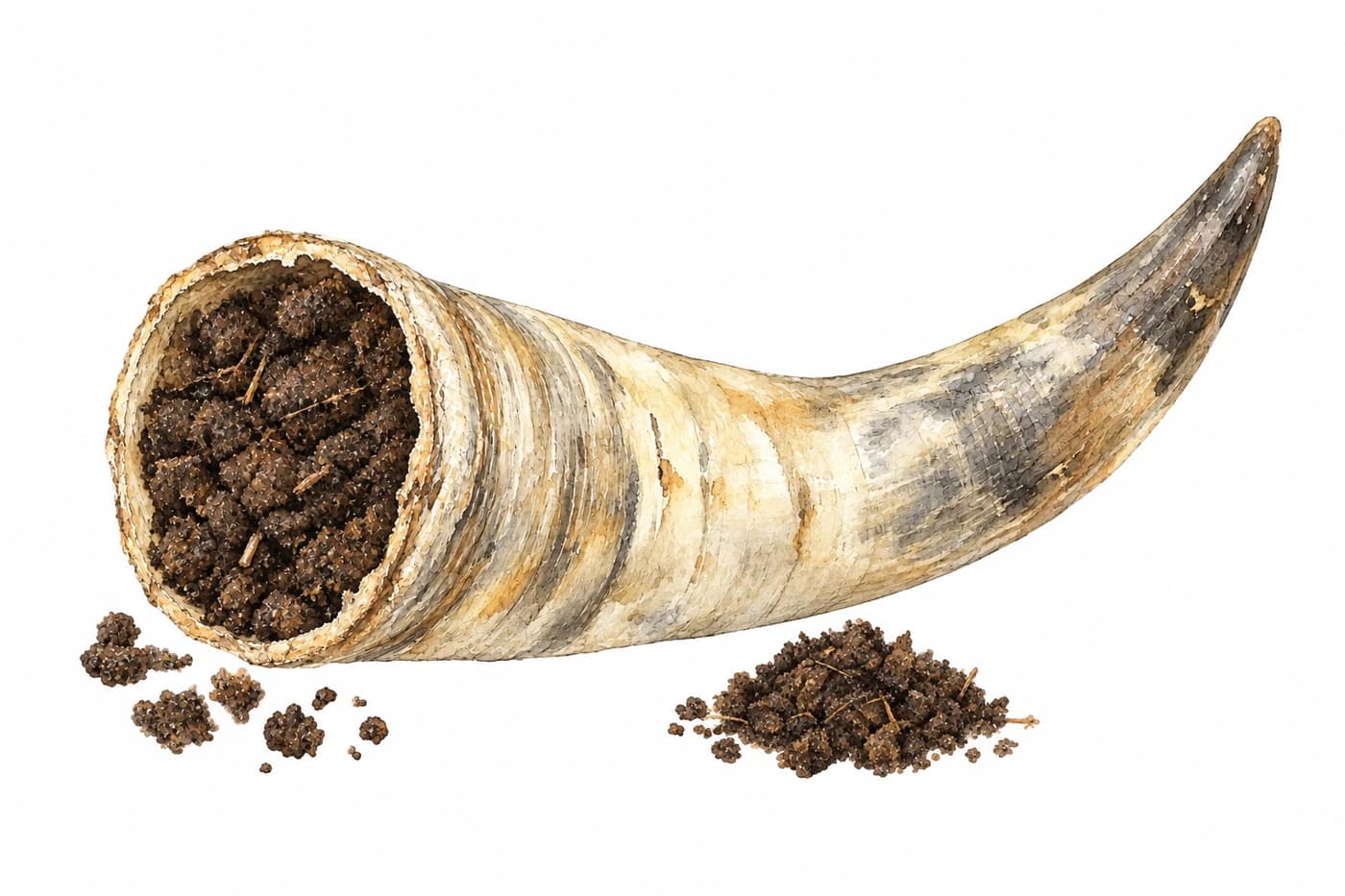
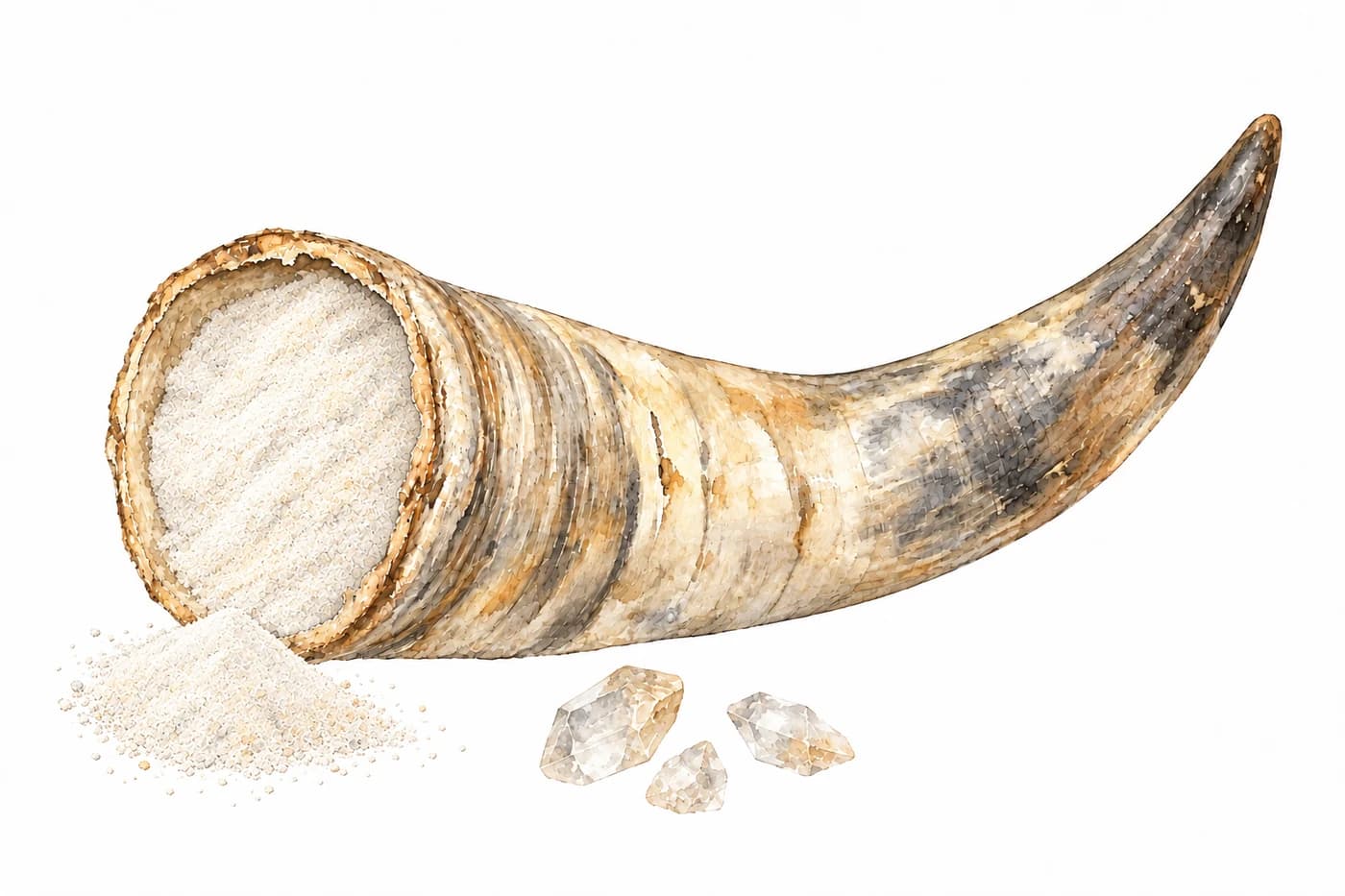
The biodynamic preparations are closely connected with this guiding image. Nikolai Fuchs calls them "constitutional remedies for the agricultural individuality": they do not fight individual symptoms but strengthen the organism as a whole. Horn manure 500 gives the soil structure and liveliness, horn silica 501 conveys light and ripening, the compost preparations order decomposition; together they are meant to "get the whole farm moving and keep it moving". The farm organism is, so to speak, the patient, and the preparations are its tonics.
In context
The completely closed farm organism is an ideal that can hardly be achieved one hundred percent in practice, as Steiner already knew. Specialised farms, limited land and economic pressures set limits. In reality, farms approach the image to different degrees, often through cooperation between farms. As a guiding image, the concept nevertheless shapes all biodynamic farm planning and sets the method fundamentally apart from a way of farming that treats fertility as a commodity that can be bought. It is also one of the ideas of biodynamics that connects most easily with others: the idea of the cycle largely matches modern concepts of regenerative and circular agriculture.
The farm as an organism
Above the farm work the sun and the planets, below it silica and lime in the rock. In between a cycle closes, and the preparations strengthen it.
In the compost heap
yarrow, chamomile, stinging nettle, oak bark, dandelion, valerian
On the field
horn manure, horn silica, plus horsetail
The plant stands on its head
The model for the farm is the human being with three functional systems. In the plant they appear the other way up: what the head is for us, the root is for the plant.
- Building up · sleeping
- Plant
- Flower: forming substances
- Human
- Metabolism and limbs
- Breathing · diaphragm
- Plant
- Leaf: assimilation, with the air near the ground and the topsoil
- Human
- Rhythmic system
- Breaking down · waking
- Plant
- Root: forming salts
- Human
- Nerves and senses
In the plant the xylem sap rises and the living sap descends.
Like a person, a farm has several levels: its soil and animals, its rotation and landscape, its knowledge and history. Out of these it becomes an individuality of its own.
Sources
Compiled from knowledge graphic no. 1 in Lebendige Erde (1/2019), no. 7 (1/2020), no. 15 (3/2021).
Frequently asked questions about the farm organism
What does farm organism mean, in simple terms?
The farm is thought of as a single living organism: soil, plants, animals and people are connected, and the farm should produce its basic needs (feed, manure, seed) itself as far as possible instead of buying them in.
Why are animals important for the farm organism?
Ruminants make use of grassland and provide the manure that closes the farm's nutrient cycle. Without animals, a central organ is missing and has to be replaced in another way.
Does every biodynamic farm have to keep animals?
Not necessarily itself, but animals must be part of the picture: through its own livestock, cooperation or bought-in prepared farmyard manure. For horticultural holdings above a certain size, Demeter requires a minimum livestock density.
Who coined the term farm organism?
The image goes back to Rudolf Steiner and the Agriculture Course of 1924, in which he described the farm as a "self-contained individuality".
Buy and use biodynamic preparations
 Horn manure 500from €19.69View preparation →
 Horn silica 501from €14.19View preparation →
 Horsetail preparation 508from €14.19View preparation →
All biodynamic preparations →How much do I need? Open the preparation calculator →