Demeter
The trademark for biodynamic produce and the oldest organic farming association, named after the Greek goddess of agriculture.
The sowing days in your inbox once a month
The calendar mail brings the sowing days and all gardening sheets as PDFs every month. Free, unsubscribe with one click.
What is Demeter?
Demeter is three things at once: a trademark for biodynamically produced food, the name of the oldest organic farming association and, in a wider sense, a synonym for biodynamic farming as a whole. The name comes from Demeter, the Greek goddess of agriculture and fertility.
Demeter is regarded as the strictest of the organic standards. Anyone who wants to carry the mark meets not only the legal organic requirements but a whole series of further requirements, above all the compulsory work with the biodynamic preparations and the development of the farm as a farm organism. Over 90 percent of Demeter's customers in the German-speaking countries are in Germany; internationally, the association is represented in many countries.
Trademark, association and method: three levels
In everyday use these three meanings are often mixed up, which leads to misunderstandings. As a trademark, Demeter labels a product. As an association, Demeter organises producers, processors and certification. As a method, the name stands for biodynamic agriculture after Rudolf Steiner. Anyone who says "Demeter" means one or the other depending on the context.
Origin and history
The starting point was Rudolf Steiner's Agriculture Course at Whitsun 1924 at Koberwitz estate. The organisation grew out of the movement that followed, in several steps.
As early as 1927, the Demeter marketing company was founded. 1928 brought the Demeter mark and the first Demeter standards. In 1932, the term Demeter was registered as a trademark at the patent office in Munich; in 1954, the Demeter-Bund received the trademark rights. This makes Demeter the oldest organic farming association of all, decades before the EU organic regulation and most other associations.
Demeter as an addition, not a replacement
A key point: the Demeter standard sits on top of the EU organic regulation. A Demeter farm is always EU organic certified as well and additionally meets the further Demeter requirements. Where the two differ, the EU regulation takes precedence; Demeter tightens it but does not replace it.
Added to this is the logic of the positive list: what the standards do not expressly allow is not permitted. This covers production methods, raw materials, ingredients, feed and farm inputs. This logic makes Demeter narrower than EU organic, not broader.
How does Demeter differ from EU organic and other associations?
Several points go beyond the general organic standard and beyond associations such as Bioland or Naturland.
Compulsory work with the preparations. The biodynamic preparations are compulsory: horn manure 500 at least once a year on all land, horn silica 501 in a way suited to the crop, the compost preparations in all organic farmyard manures. No other association requires this.
Farm organism and livestock. The guiding image is a largely closed farm cycle; animals, above all ruminants, are a central part of it. Horticultural holdings above a certain size have a minimum livestock requirement.
Seed. Hybrid varieties of cereals are excluded and open-pollinated varieties are preferred; in horticulture, CMS varieties (cell fusion) are banned.
Tighter limits. Nitrogen fertilisation is capped (around 112 kg N/ha on average across the farm), below the EU requirements.
Genetic engineering and social responsibility. GMOs are excluded along the whole chain, including "new genomic techniques". Every Demeter farm also publishes a statement on social responsibility.
The biodynamic basis
Behind all this lies a different understanding of nature. The Demeter standards put it in their first chapter: biodynamic agriculture aims for "a farm cycle that is as closed as possible" and wants to "develop farms as individual farm organisms", taking into account the interplay of people, animals, plants and soil "up to cosmic influences". One of its main aims is "to promote the liveliness of the soil". The preparations are the defined practice that carries this approach.
Demeter seed and plant breeding
Demeter goes further than others on seed: there is a separate biodynamic plant breeding with verifiable criteria. Varieties "from biodynamic breeding" go through at least four years of selection under biodynamic conditions, hybrid breeding is excluded, and the history of a variety must be publicly traceable. For customers this means that Demeter seed stands out not only through the logo, but through documented transparency about origin and breeding.
Demeter internationally
Demeter is organised internationally today. The framework is set by the Biodynamic Federation Demeter International, the umbrella organisation that the national organisations follow, among them Demeter e. V. in Germany (with regional associations) and Demeter Switzerland. National rules may be stricter than the international umbrella standard but may not deviate from it.
How does a farm become a Demeter farm?
Recognition comes through a certification process with conversion over several years and annual inspection. The details (conversion period, registration deadlines, what is inspected) are described in the entry on Demeter certification.
In context
As an organic standard, Demeter indisputably has the most far-reaching requirements. Its biodynamic basis has anthroposophical roots, which is part of the public debate about the association, ranging from criticism of esoteric elements to studies that credit the system with advantages in soil fertility and product quality (see biodynamics and science). Anyone assessing Demeter should keep trademark, method and world view apart.
Demeter worldwide
Around 7,500 Demeter farms work some 267,000 hectares worldwide, in more than 50 countries. Even more farms work biodynamically without certification.
- Germany112,482 ha · 1,772 farms
- France33,607 ha · 947 farms
- Italy14,896 ha · 454 farms
- United States14,595 ha · 143 farms
- Spain13,342 ha · 467 farms
- Netherlands8,857 ha · 149 farms
- Austria8,559 ha · 266 farms
- Switzerland + Liechtenstein8,350 ha · 419 farms
- Hungary6,666 ha · 35 farms
- Czechia5,159 ha · 9 farms
Show all countries
- Denmark4,763 ha · 48 farms
- India4,705 ha · 33 farms
- United Kingdom + Ireland3,857 ha · 89 farms
- Poland2,450 ha · 20 farms
- Lithuania2,365 ha · 15 farms
- Egypt2,274 ha · 17 farms
- Chile1,715 ha · 14 farms
- Dominican Republic1,664 ha · 41 farms
- Argentina1,622 ha · 23 farms
- Brazil1,428 ha · 25 farms
- Thailand1,296 ha · 335 farms
- Türkiye1,078 ha · 77 farms
- Sweden930 ha · 19 farms
- Sri Lanka903 ha · 1,114 farms
- Greece740 ha · 65 farms
- Tunisia725 ha · 141 farms
- Portugal673 ha · 14 farms
- Paraguay668 ha · 3 farms
- Luxembourg538 ha · 11 farms
- Norway530 ha · 23 farms
- Bulgaria515 ha · 5 farms
- Honduras510 ha · 112 farms
- Colombia445 ha · 7 farms
- New Zealand440 ha · 15 farms
- Ukraine414 ha · 1 farms
- Peru390 ha · 126 farms
- Slovenia375 ha · 42 farms
- Belgium301 ha · 16 farms
- Romania276 ha · 4 farms
- Kenya268 ha · 260 farms
- Mexico260 ha · 3 farms
- China255 ha · 7 farms
- South Africa222 ha · 29 farms
- Finland177 ha · 10 farms
- Slovakia155 ha · 2 farms
- Nicaragua125 ha · 32 farms
- Iran120 ha · 3 farms
- Bosnia & Herzegovina116 ha · 1 farms
- Croatia42 ha · 8 farms
- Suriname37 ha · 1 farms
- Serbia32 ha · 23 farms
- Morocco26 ha · 1 farms
- Malaysia14 ha · 1 farms
- Georgia8 ha · 1 farms
Country with its own Demeter certification. In the other countries the Biodynamic Federation – Demeter International certifies directly.
A hundred years of the Demeter brand
From the course at Koberwitz to an international brand owner: the main milestones of the oldest brand for biodynamic food.
- 1924
The course at Koberwitz
Participants found the Agricultural Experimental Circle of the Anthroposophical Society straight afterwards.
- 1927
A name is born
The term “biodynamic” comes up, and a marketing cooperative names itself after the Greek goddess of the fertile earth: Demeter.
- 1928
The first rules
The Demeter standard defines who may use the name and introduces the first Demeter mark.
- 1929
Customers organise
Citizens in Breslau found the first Demeter consumer circle.
- 1932
A protected brand
Demeter is registered as a trademark at the patent office.
- 1941
Banned
The biodynamic organisations, and with them the brand, are banned.
- 1946
A new start
The Forschungsring is founded as successor to the Experimental Circle and becomes owner of the brand.
- 1954
Recognised again
With the Demeter-Bund, the certification of farms starts again; in 1955 there are 14 farmers and processors.
- 1967
The new logo
The “demeter” word-and-image mark is redesigned and registered.
- 1997
Demeter International
The conference on international Demeter questions, issuing framework standards since 1987, becomes Demeter International.
- 1999
One look everywhere
The brand is redesigned; a labelling standard makes sure it looks the same everywhere.
- 2020
Biodynamic Federation
The Biodynamic Federation – Demeter International becomes brand owner. In 2023 the brand is filed in 75 countries, and 19 Demeter organisations certify on their own.
Source
Compiled from the knowledge graphic “The history of the Demeter brand” in Lebendige Erde (2/2023).
Frequently asked questions about Demeter
What does Demeter mean?
Demeter is the trademark for biodynamically produced goods and the name of the associated farming association, named after the Greek goddess of agriculture.
What is the difference between Demeter and organic?
Demeter meets all EU organic requirements and adds stricter ones: compulsory work with the preparations, a farm organism with livestock, a ban on hybrid cereals, tighter fertilisation limits. Organic is the legal minimum standard; Demeter goes considerably further.
Since when has Demeter existed?
The movement begins in 1924 with Steiner's Agriculture Course. The Demeter marketing company was founded in 1927, the Demeter mark in 1928, and the trademark was registered in 1932.
Is Demeter stricter than Bioland and Naturland?
With regard to the biodynamic method, yes: Demeter is the only one of the large associations with compulsory preparations and the farm organism as its guiding image.
Where does the name Demeter come from?
From the Greek goddess Demeter, goddess of agriculture, grain and fertility.
Buy and use biodynamic preparations
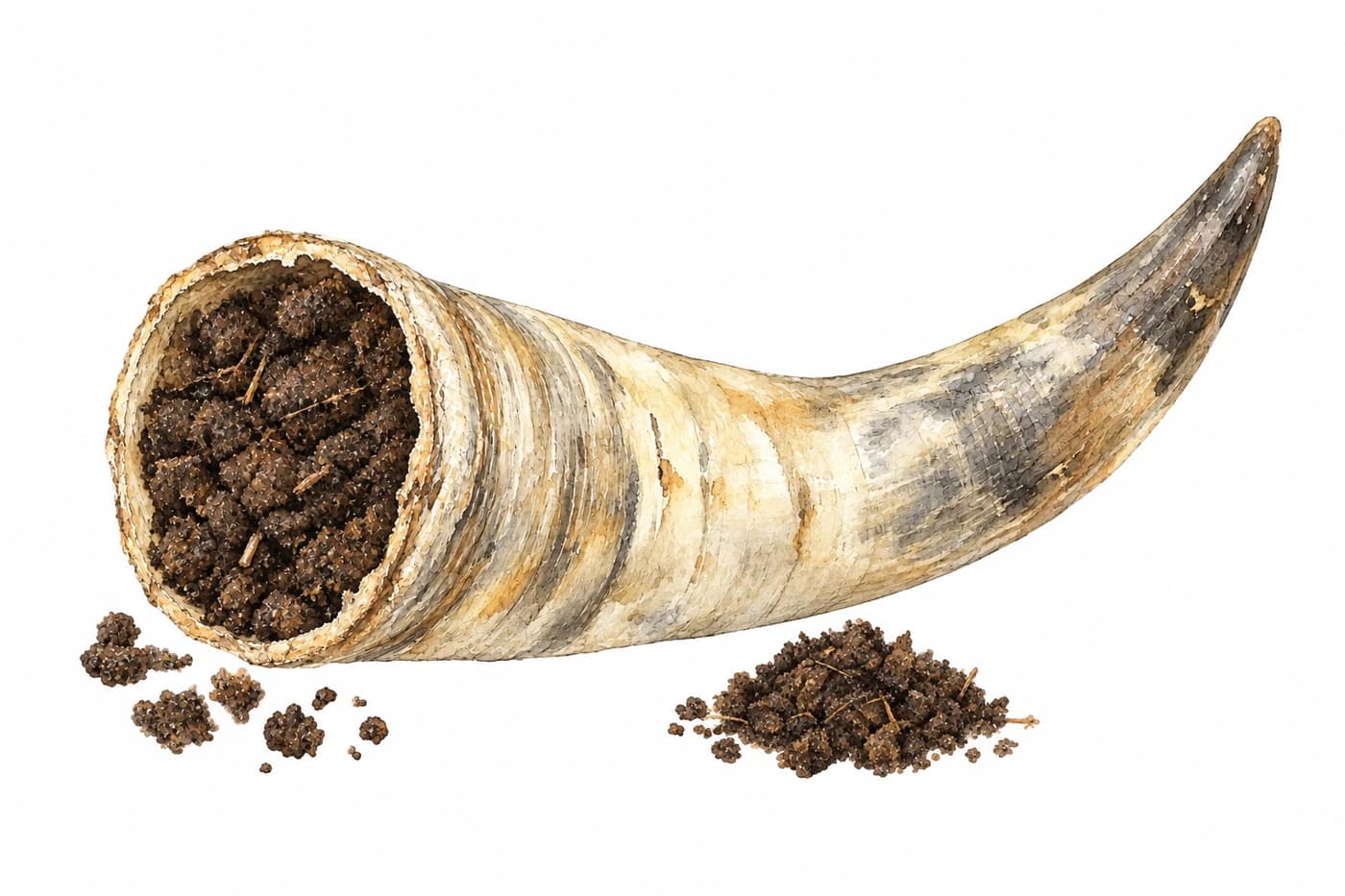 Horn manure 500from €19.69View preparation →
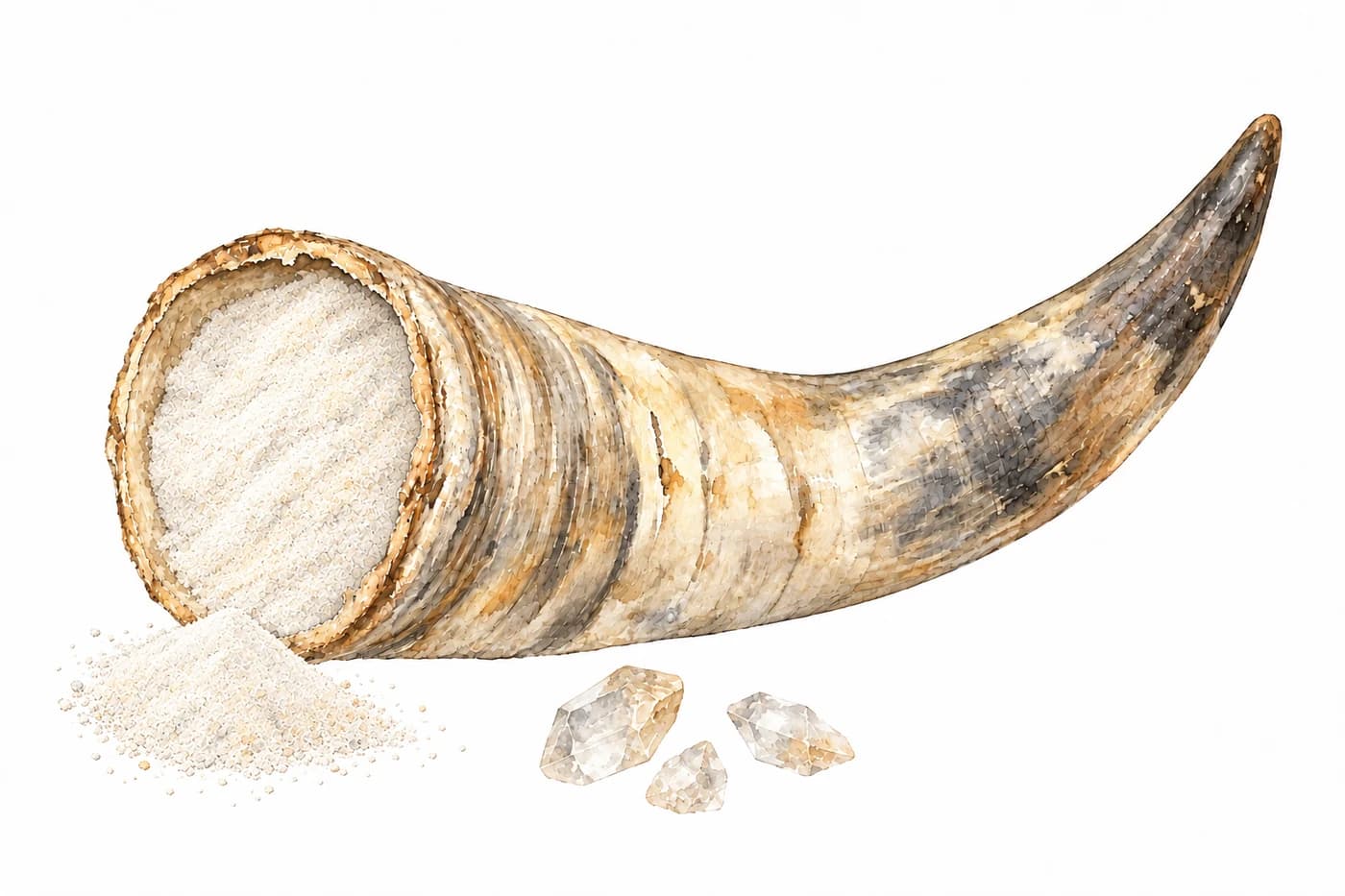 Horn silica 501from €14.19View preparation →
 Horsetail preparation 508from €14.19View preparation →
All biodynamic preparations →How much do I need? Open the preparation calculator →