Biodynamic agriculture
The oldest branch of organic farming, founded by Rudolf Steiner in 1924: the farm as a living organism, with its own cycles and the biodynamic preparations.
The sowing days in your inbox once a month
The calendar mail brings the sowing days and all gardening sheets as PDFs every month. Free, unsubscribe with one click.
What is biodynamic agriculture?
Biodynamic agriculture is the oldest branch of organic farming. It goes back to Rudolf Steiner, who set out its foundations in 1924 in the Agriculture Course, decades before organic-biological farming and the EU organic regulation. In German, "biodynamisch" and "biologisch-dynamisch" mean the same thing; in English, "biodynamic" is the established term.
Rather than being a mere set of rules about what to avoid (no chemicals, no genetic engineering), biodynamics is a holistic concept: the farm is understood as a living organism that sustains itself as far as possible. Soil, plants, animals and people form an interplay that is cared for through closed cycles, the farm's own manure and the biodynamic preparations. Biodynamic farming is certified mainly through the Demeter association.
The basic ideas at a glance
The biodynamic idea can be condensed into a few core principles:
- The farm as an organism. The farm is understood as a living, self-contained whole made up of interdependent members, the guiding image of the farm organism.
- Plants and animals together. Animals, above all ruminants, complement crop growing and provide the manure that closes the cycle.
- Living fertility. The aim is a living soil whose fertility is renewed from within, through compost, crop rotation and circular management.
- The preparations. The biodynamic preparations (500 to 508) enliven soil, compost and plants.
- Working with rhythms. Where possible, sowing, care and harvest are timed to favourable moments in the course of sun, moon and year.
- Gentle plant protection. Pests and diseases are met preventively and by strengthening, not by aggressive intervention.
- Spiritual basis. The method rests on a spiritual-scientific understanding of nature (anthroposophy).
The three pillars of the method
Three elements concretely distinguish biodynamic farming from other forms of cultivation. First, the farm organism: the largely closed farm cycle with its own basis of feed and manure and with animals as a central member. Second, the preparations, which guide the processes in soil and compost. Third, attention to cosmic and seasonal rhythms, as expressed for example in the planting calendar.
No synthetic inputs
Like all organic farming, biodynamic agriculture does without chemical-synthetic pesticides, artificial mineral fertilisers and genetic engineering. It fertilises with farmyard manure, slurry and compost, as far as possible from the farm itself. The preparations do not replace this manuring but enliven it (Steiner spoke of an "extra manuring").
Origin and context
The impetus came from a series of lectures that Rudolf Steiner gave at Whitsun 1924 at Koberwitz in Silesia to around a hundred farmers. This "Agriculture Course" (GA 327) is regarded as the founding text and is still the original source of all biodynamic literature. The occasion was farmers' concern about declining soil fertility and seed quality at a time when artificial fertilisers were coming into use. The Demeter association grew out of the movement and still certifies the method today.
What distinguishes biodynamic from organic?
"Organic" refers to organic farming under the EU regulation, the legal minimum standard. "Biodynamic" goes further: in addition, the farm organism, compulsory work with the preparations, livestock as part of the farm, a ban on hybrid cereals and stricter limits. The Demeter standard sits on top of the organic regulation; it does not replace it (see organic associations compared).
In context
Biodynamic agriculture has anthroposophical roots, and parts of its reasoning, such as the reference to cosmic forces, come from Steiner's spiritual-scientific world view. These concepts can be tested scientifically only to a limited extent and are controversial. For the farming system as a whole, however, there is robust data: the DOK long-term trial of FiBL (since 1978) found the highest soil fertility in the biodynamic system, with higher humus content and increased activity of soil organisms. The movement's contribution to the development of organic farming as a whole is undisputed; its idea of the cycle largely matches modern concepts of regenerative agriculture (more under biodynamics and science).
How varied Demeter farms are
From a holding under one hectare to a farm of more than 500 hectares: 1,695 Demeter farms, as of 1 January 2020.
245
Large farms
100 to 500 ha: 233 · over 500 ha: 12
188
Small farms
under 1 ha: 50 · 1 to 5 ha: 138
153
Fruit and vines
1 to 5 ha: 38 · over 5 ha: 115
516
Dairy cows
20 to 100 cows: 404 · over 100 cows: 26
147
Laying hens
100 to 1,000 hens: 108 · over 1,000 hens: 39
146
Beekeepers
20 to 50 colonies: 44 · over 50 colonies: 21
70
Fattening pigs
20 to 100 pigs: 57 · over 100 pigs: 13
about550
Sell direct
farm shop, market, veg box, CSA, mail order
about244
Process on the farm
including commercial on-farm processors
Large number: both size classes together; for dairy and beekeepers, all farms. One farm can appear in several tiles.
What came out of biodynamics
Since 1924 the biodynamic movement has invented or rethought a great deal, from the field to the kitchen. A selection.
Community supported agricultureA community carries the farm and shares the harvest.
Sowing calendarSowing and planting by the moon and the planets.
Calves with their mothersCalves stay long with their mother or a nurse cow.
Bee-centred beekeepingIt led to Demeter’s own standards for bees.
Own breedingOrganic varieties of vegetables and cereals.
Compost with preparationsCompost windrows that mature with the biodynamic preparations.
Land held in commonFarms belong to an association, a foundation or a cooperative rather than one person.
On-farm processingCheese-making and baking return, with new breads and cheeses.
Honey-salt leavenA raising agent with honey and salt for bread, after Hugo Erbe.
Making quality visiblePicture-forming and sensory methods add to laboratory analysis.
Frequently asked questions about biodynamic agriculture
What is the difference between organic and biodynamic?
Organic is the legal minimum standard. Biodynamic goes further: farm organism, compulsory work with the preparations, livestock, a ban on hybrids, stricter rules. Biodynamic farms meet the organic requirements and add further ones.
Who founded biodynamic agriculture?
Rudolf Steiner, with the Agriculture Course of 1924 at Koberwitz.
Is it "biodynamic" or "biological-dynamic"?
Both mean the same thing. In English, "biodynamic" is the common term; "biologisch-dynamisch" is the older German form.
How is biodynamic produce labelled?
With the Demeter mark, the trademark for biodynamically produced goods.
Buy and use biodynamic preparations
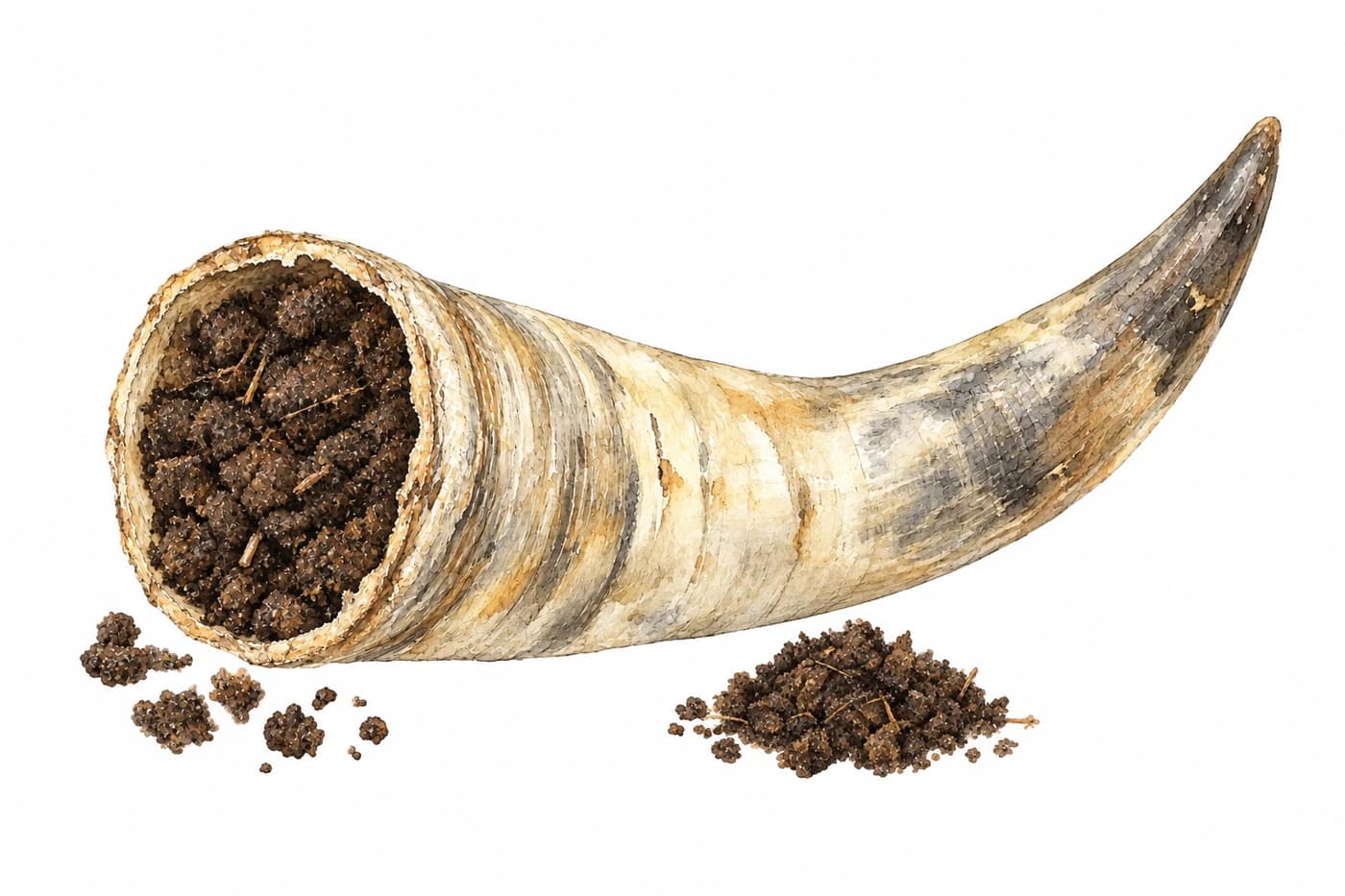 Horn manure 500from €19.69View preparation →
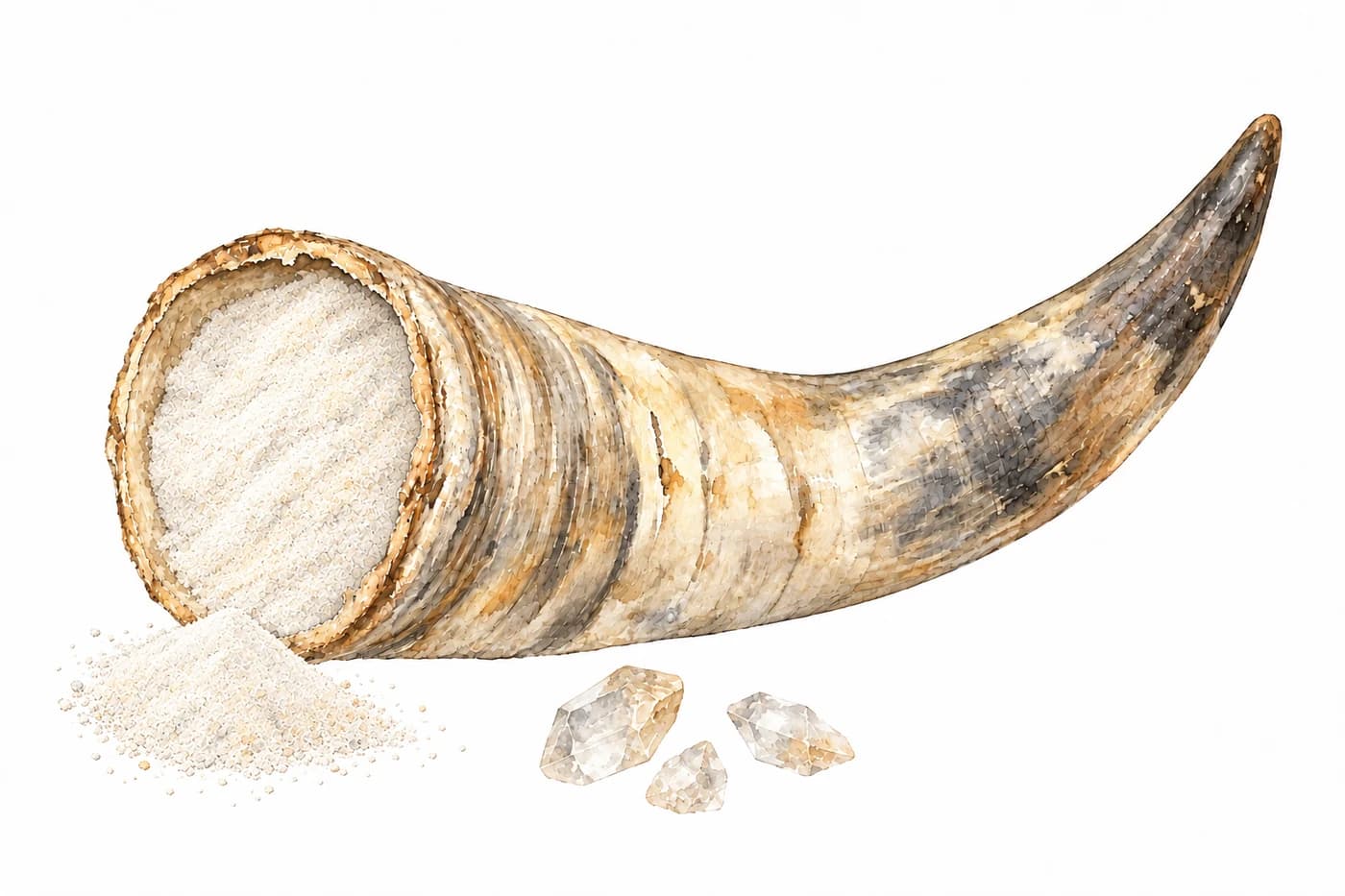 Horn silica 501from €14.19View preparation →
 Horsetail preparation 508from €14.19View preparation →
All biodynamic preparations →How much do I need? Open the preparation calculator →