Horsetail tea and horsetail decoction
Horsetail tea or horsetail decoction is a boiled extract of field horsetail (508). It is diluted and sprayed onto soil and plants, preventively against mildew, rust and rot.
The sowing days in your inbox once a month
The calendar mail brings the sowing days and all gardening sheets as PDFs every month. Free, unsubscribe with one click.
What is horsetail tea?
Horsetail tea, also called horsetail decoction, is the usual way of applying field horsetail (preparation 508). The dried or fresh plant is boiled in water, and the liquid is diluted and sprayed onto soil and plants. Biodynamic growers use it preventively against fungal diseases, especially mildew, rust, monilia, and late blight and brown rot (Masson 2015, chapter on plant extracts).
What makes it work is horsetail's high silica content. Through the "light forces" of silica, it is credited with fungus-inhibiting properties that make the plant firmer: the plant becomes more resistant and its surfaces are strengthened. This is also an established use in organic gardening in general. Rudolf Steiner recommended horsetail against fungal diseases in the Agriculture Course of 1924.
Tea, decoction and brew all mean the same thing: a boiled extract. Plant material fermented in water gives horsetail liquid manure.
Recognising the right horsetail
Only field horsetail (Equisetum arvense) is used. Marsh horsetail (Equisetum palustre), wood horsetail and great horsetail (Equisetum telmateia) are unsuitable.
Field horsetail grows in a spindle shape. The green, sterile summer shoots grow 20 to 80 centimetres tall, are deeply grooved and feel rough. Their side branches are not hollow and show four sharp edges in cross-section. The stem sheaths carry 8 to 12 triangular teeth (Masson 2015, chapter on plant extracts). A reliable sign: in field horsetail the gaps between the nodes on the main stem are shorter than on the side shoots (Wistinghausen et al., making the preparations, chapter on field horsetail).
In spring, field horsetail first puts up pale, unbranched shoots with a spore cone. What is collected are the green summer shoots that grow afterwards from the same rootstocks.
Collecting and drying
The whole green plant above ground is collected around St John's Day, on a sunny day. The silica content is highest in high summer. The plant is spread out very thinly in airy shade to dry; the finished herb should stay green (Wistinghausen et al., making the preparations). It is stored like tea in an airy cloth bag. It can be finely ground before boiling.
The dried herb keeps for one year, so it is collected fresh every year (Masson 2015).
How to make horsetail decoction: the recipe
For farms, orchards and vineyards (Wistinghausen et al., making the preparations):
- 200 to 300 grams of dried herb or 1 to 1.5 kilograms of fresh herb
- in 10 to 20 litres of water, rainwater if possible
- simmer gently for about an hour, covered
- leave to cool and strain
The decoction can be left to stand covered for another day after boiling. If the herb is soaked a day before boiling, the extract is considered even stronger (Masson 2015).
For the home garden, scaled down to a tenth: 20 to 30 grams of dried herb, a good handful, simmered for an hour in 1 to 2 litres of water, cooled and strained.
Dilution and dose
Before spraying, the decoction is diluted: one part decoction to nine to nineteen parts water, a solution of 5 to 10 percent. Masson describes the right dilution as "medium tea colour", ideally one part decoction to nine parts water. About 100 litres of diluted decoction are needed per hectare (Wistinghausen et al., making the preparations), so in the garden about one litre per 100 square metres.
Before it is applied, the diluted decoction can be stirred for 20 minutes, as with the dynamisation of horn manure and horn silica (Masson 2015).
Undiluted, the decoction keeps for a few weeks, cool and dark in tinted glass jars.
When and how often to spray
Horsetail decoction works preventively and is sprayed repeatedly, two to four times in a season (Wistinghausen et al., application):
- Spring: from February or March, more often in warm and damp weather, because fungi spread readily then
- High summer: in crops prone to fungal disease
- Autumn: into November, above all on areas that will carry crops prone to fungal disease the following year
It is sprayed onto the soil and, in crops at risk, onto the plants, preferably in the morning in clear weather. In the moon calendar, the two days before full moon are considered the best time (Masson 2015, after Harald Kabisch). Short thaws are also favourable; the preparation can even be sprayed onto snow (Wistinghausen et al., application).
If a fungus is already present, practice recommends an intensive treatment: spray on three days in a row at the same time of day and repeat after ten days (Wistinghausen et al., application).
After St John's Day and all through summer, horsetail needs moderation in orchards and vineyards, because it can have a drying effect on sandy, silica-rich soils. Masson does not recommend more than ten sprayings on the same crop, because the soil needs its own fungal flora.
Horsetail decoction in the garden: tomatoes, vegetables, fruit
- Tomatoes and potatoes: preventively against late blight and brown rot (Masson 2015)
- Beans: against rust; lettuce: against fungi and bacteria (Masson 2015)
- Strawberries, cucumbers, courgettes, berry bushes: spray the beds in autumn (Wistinghausen et al., application)
- Seedlings: spray the soil for sowing and pot raising with the decoction before sowing (Wistinghausen et al., application)
- Fruit trees and vines: at bud break, as soon as the green tips show, and one last time at the start of leaf fall. In autumn and after pruning, horsetail decoction also goes into the trunk coating, see tree paste (Masson 2015)
- Cereals: winter cereals in autumn, barley at the start of tillering (Masson 2015)
In vegetable growing under glass and in the open, a mixed tea of three quarters stinging nettle and one quarter horsetail has proved its worth. In bad weather it can be sprayed up to twice a week (Masson 2015).
Frequently asked questions about horsetail tea
How do you make horsetail decoction?
Simmer 200 to 300 grams of dried herb gently in 10 to 20 litres of water for about an hour, cool, strain and dilute to 5 to 10 percent. For the garden, a tenth of that is enough.
How do you dilute horsetail decoction?
One part decoction to nine to nineteen parts water. The finished spray has a medium tea colour.
How often do you spray horsetail decoction?
Two to four times in spring and in autumn, plus in high summer for crops prone to fungal disease. If a fungus has already appeared, three days in a row and once more after ten days.
Does horsetail tea help against powdery mildew?
Biodynamic growers use it preventively against mildew, rust and other fungal diseases, ideally before an infection and repeatedly.
Does horsetail tea help tomatoes against blight?
It is sprayed on tomatoes and potatoes preventively against late blight and brown rot, onto soil and plant.
Which horsetail is the right one?
Only field horsetail (Equisetum arvense). Marsh, wood and great horsetail are unsuitable.
How long does horsetail decoction keep?
The undiluted decoction keeps a few weeks, cool and dark in tinted jars. The dried herb keeps for one year.
Buy and use biodynamic preparations
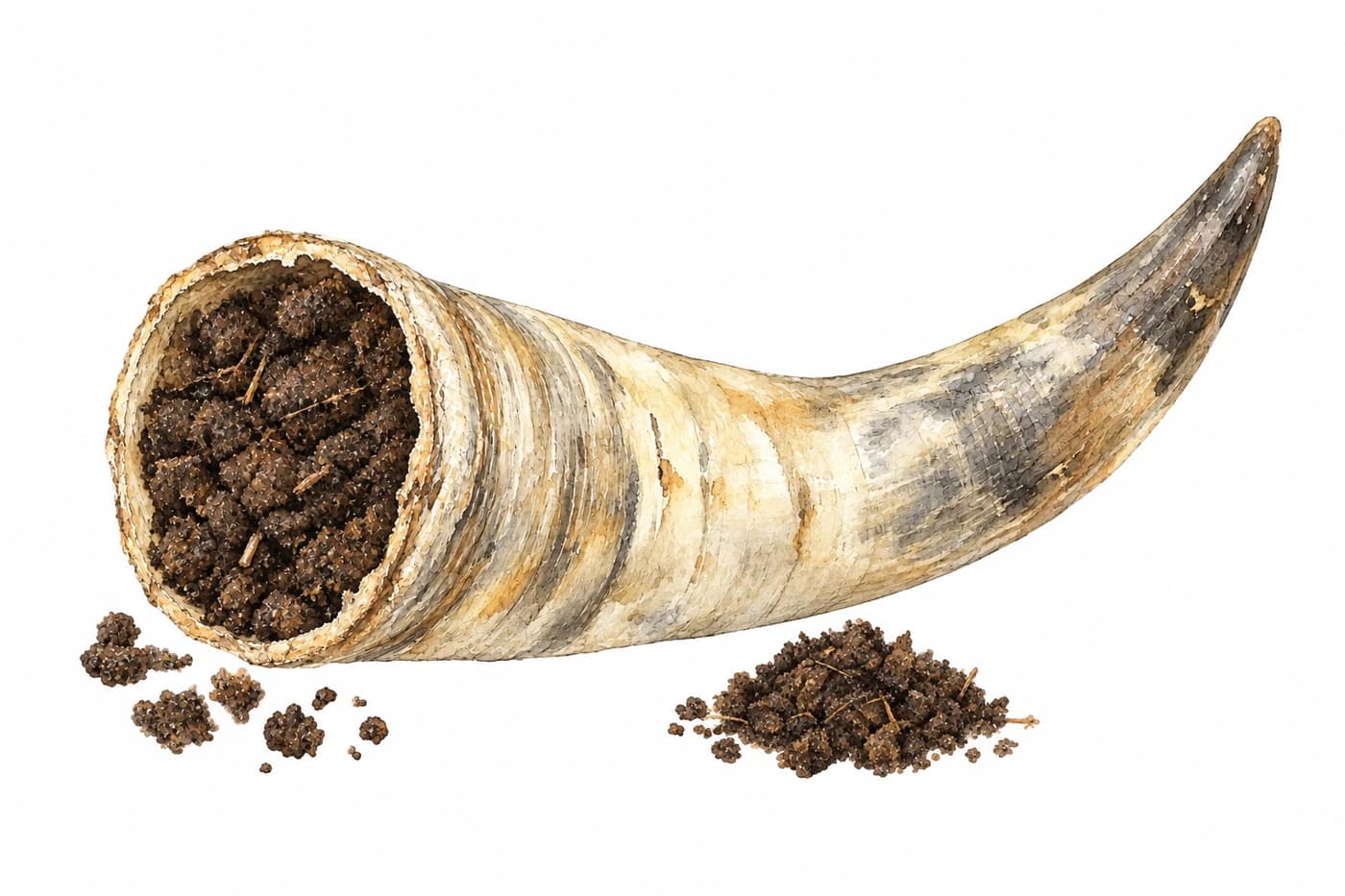 Horn manure 500from €19.69View preparation →
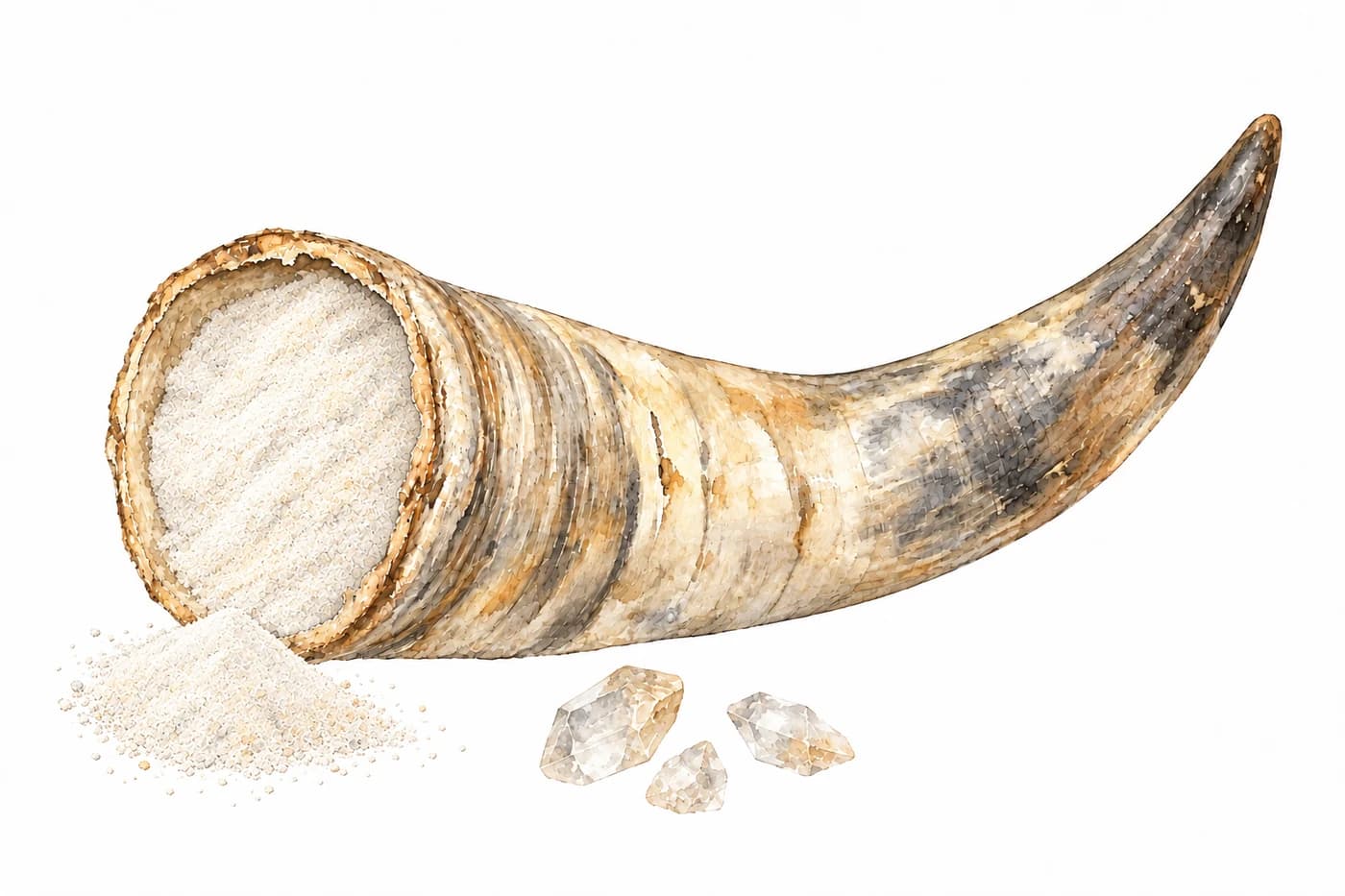 Horn silica 501from €14.19View preparation →
 Horsetail preparation 508from €14.19View preparation →
All biodynamic preparations →How much do I need? Open the preparation calculator →